

The Quiet Luxury of Acoustic Balance in Modern Hospitality
In a well-run café, sound is part of the welcome. It begins before the first sip, in the soft rhythm of cups placed on tables, the steady whisper of conversation, and the gentle movement of guests settling into their preferred corner. Good acoustics make these details feel cohesive rather than intrusive. They help a visitor linger over a morning coffee, allow colleagues to speak without strain, and give staff the clarity needed to serve with ease. For operators considering a broader hospitality acoustic strategy, sound control is not a technical afterthought. It is part of the guest experience, alongside lighting, seating, aroma, and service.
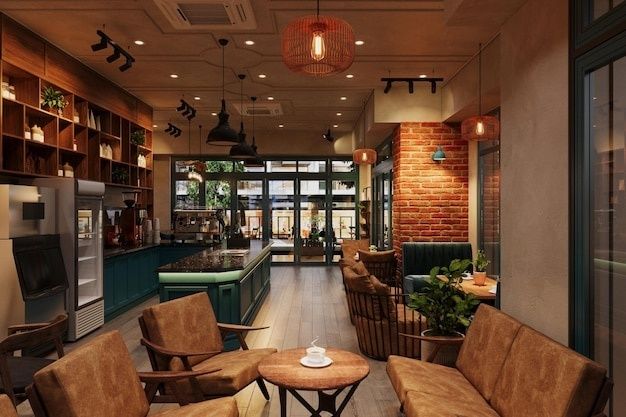
Modern cafés often inherit a visual language that is clean, bright, and architectural: polished concrete, expansive glass, ceramic tile, exposed ceilings, and crisp metal furnishings. These materials can create a refined, contemporary setting, yet they also reflect sound with remarkable efficiency. A lively room can quickly become tiring when every grinder, chair movement, and nearby conversation ricochets across its surfaces. The aim is not absolute silence, which can feel sterile and disconnected, but a balanced soundscape with enough energy for community and enough softness for concentration. Like a calm lakeside salon, the room should invite people in without asking them to compete with it.
Understanding the Decibel Toll of Hard Surfaces
Café noise tends to rise through accumulation. The espresso machine contributes one layer, blenders and refrigeration another, while footsteps, dishwashing, music, delivery activity, and overlapping conversations fill the remaining space. During a busy service, dining environments can approach or exceed 80 to 85 decibels, especially when kitchens and seating areas share an open plan. A restaurant noise overview from Kitchenall notes that levels around 85 decibels can create concerns for staff exposure as well as making ordinary conversation difficult. Even when the sound is not immediately painful, prolonged effort can produce fatigue, irritation, and shorter visits.
The underlying physics is straightforward. Hard, smooth surfaces reflect sound rather than absorbing it. Polished concrete sends a voice toward the ceiling, glass returns it toward the room, and subway tile breaks a sound into multiple reflections. In a sparsely furnished café, these reflections overlap before the original sound has faded. This is reverberation, and it makes speech less distinct because consonants from one word can blur into the next. High ceilings and open staircases can intensify the effect by giving sound more room to travel before it loses energy.
As the room becomes louder, people instinctively raise their voices to be heard. This response is known as the Lombard effect. One louder table encourages another to speak more forcefully, while staff may project across the counter and music may be increased to preserve its presence. The cycle is easy to overlook because the room still feels lively, but the result is conversational strain and a less restful atmosphere. A useful acoustic audit should observe the café during its busiest period, not only during a quiet morning. Operators can note where voices become difficult to understand, whether staff must repeat orders, and which equipment or seating zones generate the greatest disturbance.
- Measure sound in several zones, including the entrance, espresso counter, communal tables, and quieter seating.
- Listen for repeated reflections near glass, tile, concrete, and high ceilings.
- Check whether staff must raise their voices or repeat customer orders during peak service.
- Address mechanical vibration, blenders, ice machines, and refrigeration as well as customer noise.
- Combine absorption, diffusion, zoning, and operational changes rather than relying on one treatment.
Sculpting the Ceiling with Baffles and Clouds
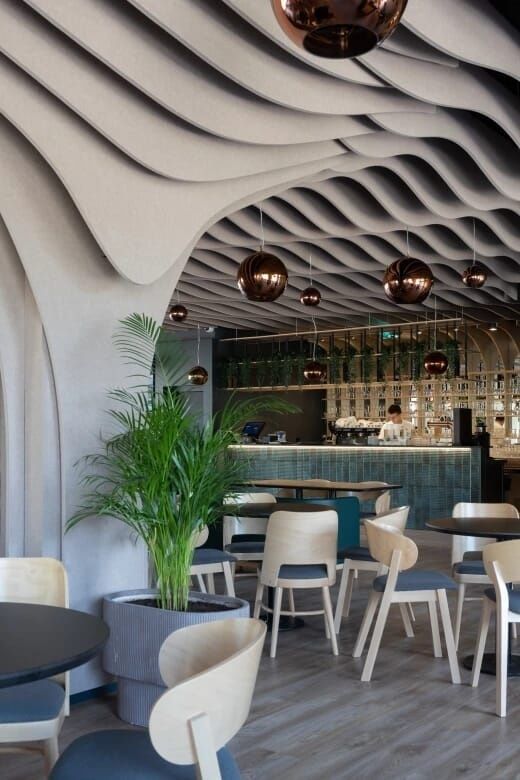
The ceiling is often the most influential acoustic surface in an open café because sound naturally rises and spreads across the broadest uninterrupted plane. Suspended baffles and acoustic clouds interrupt that journey. They capture a portion of the sound before it returns to the seating area, reducing reverberation while preserving the generous visual volume that makes an open interior attractive. This approach is especially helpful where a conventional acoustic ceiling would conceal architectural character or make a lofty room feel compressed.
Design flexibility makes overhead treatment suitable for a wide range of hospitality interiors. PET felt baffles can be arranged in calm vertical rhythms, curved forms, or color gradients that echo a brand palette. Wooden acoustic slats introduce warmth and texture while allowing a ceiling to retain a crafted, natural appearance. Upholstered clouds can soften a room more quietly, appearing almost like floating panels of fabric. The spacing, thickness, air gap, and total coverage all affect performance, so decorative appeal should be developed alongside an acoustic plan rather than added as a final gesture.
Hospitality case studies show why integration matters. At the Four Seasons Hotel in New Orleans, acoustic specialists treated six ballrooms with stretched fabric wall systems designed to improve speech clarity while maintaining an upscale finish. The custom systems were adapted around outlets, room dimensions, and audiovisual infrastructure, with a target reverberation time near 1.3 seconds for multipurpose use. The project demonstrates a valuable café lesson: acoustic treatment does not need to look industrial. It can be coordinated with the interior palette, fitted around existing constraints, and used in both new construction and retrofit work. Guidance on decorative acoustic applications can also be found through commercial ceiling and wall design.
| Ceiling treatment | Visual character | Best use |
|---|---|---|
| PET felt baffles | Colorful, lightweight, and adaptable | Open ceilings, communal seating, and branded interiors |
| Wooden acoustic slats | Warm, architectural, and textural | Natural cafés, premium interiors, and high ceilings |
| Upholstered acoustic clouds | Soft, quiet, and refined | Lounge zones, reading areas, and relaxed hospitality settings |
Textiles as Tactile Sound Absorbers
Textiles allow acoustic performance to become part of the café”s visual language. A large felt mural can bring color and local character to a blank wall while reducing reflected sound. A tapestry can soften a hard vertical plane, and a banquette upholstered in a dense textile can absorb sound close to the guest rather than allowing it to travel across the room. Commercial PET felt murals, for example, can be manufactured in custom colors and patterns, making it possible to translate a café”s identity into a useful acoustic surface rather than applying a generic panel after the design is complete.
Drapery is particularly effective near large windows, where glass otherwise creates a bright but acoustically unforgiving edge. Linen accents, woven wall hangings, rugs, and generously padded seating help diffuse low and mid frequencies and reduce the sharpness of chair movement and conversation. The result should feel layered and tactile, not overstuffed. Dense upholstery beside a window, a rug beneath a collaborative table, or a felt composition behind a reading nook can provide targeted comfort while preserving clear circulation and easy cleaning. Practical acoustic guidance for café materials includes drapes, rugs, and upholstered furniture.
- Use felt murals or fabric panels on broad walls that currently reflect sound across the room.
- Place curtains near glazing and other hard edges, particularly in high-seating areas.
- Choose durable, cleanable upholstery for banquettes and lounge chairs.
- Layer rugs and textiles where they will not obstruct accessibility or create maintenance problems.
- Coordinate colors and textures with lighting, timber, plants, and the café”s seasonal atmosphere.
Spatial Zoning for Coexisting Communities
Acoustic comfort begins with the plan. The espresso station, dish return, entrance, and delivery path naturally generate movement and sound, so placing them beside a quiet work corner creates avoidable conflict. A more thoughtful layout positions high-energy functions near one another and gives quieter activities a degree of separation. Shelving, planting, partial screens, changes in ceiling treatment, and the orientation of banquettes can define zones without making the café feel divided. Guests should sense a sequence of places, each with its own pace, rather than one undifferentiated room.
Sound masking can support this strategy when used carefully. Unlike noise cancellation, masking does not attempt to erase sound. It introduces a controlled, low-level background signal, often shaped to resemble the soft frequency profile of human speech, which raises the ambient sound floor and makes distant conversations less intelligible. This can provide a greater sense of privacy in an open work area, although levels must be calibrated room by room. The guidance in a sound masking level chart emphasizes uniformity and gradual adjustment, while hospitality specialists also recommend assessing the layout and noise sources before selecting a system.
A successful café can accommodate several communities at once, provided each has a recognizable acoustic home. A bar-facing counter can support quick visits and lively banter. A deeper lounge can offer a softer setting for long conversations. Reading nooks benefit from nearby absorption and distance from service equipment, while communal work tables can use masking, plants, and partial partitions to create focus without complete isolation.
- Map the café”s sound sources, including machinery, queues, staff routes, doors, music, and dish handling.
- Place active functions together and keep quiet seating away from the most consistent mechanical noise.
- Define micro-environments with furniture orientation, shelving, plants, screens, rugs, and ceiling treatments.
- Introduce sound masking only after absorption and zoning have addressed the room”s main reflections.
- Observe the completed space at different times of day and adjust music, masking, and seating as needed.
Designing Sanctuaries Where Every Conversation Finds Its Place
Acoustic intentionality changes what guests remember. A comfortable room supports the easy conversation that turns a short coffee stop into a regular ritual, the quiet concentration that makes a work session productive, and the relaxed pace that encourages another order. Ceiling baffles, fabric walls, upholstered seating, rugs, curtains, and careful zoning work together to shape that experience. None needs to dominate the design. Their success lies in making the atmosphere feel naturally composed, with freshness, warmth, and a gentle background hum.
For café owners and interior architects, the most durable investment is a complete sensory approach. Beautiful materials deserve an acoustic partner, just as a carefully prepared drink deserves the right cup and temperature. The finest spaces allow social vitality and stillness to coexist: lively near the counter, composed by the window, and quietly welcoming in every seat between them. When every conversation finds its place, hospitality becomes easier to feel, easier to enjoy, and much more likely to bring guests back.